Laminate vs. Veneer: Choosing the Right Finish for Your Furniture | Fairwell GPC
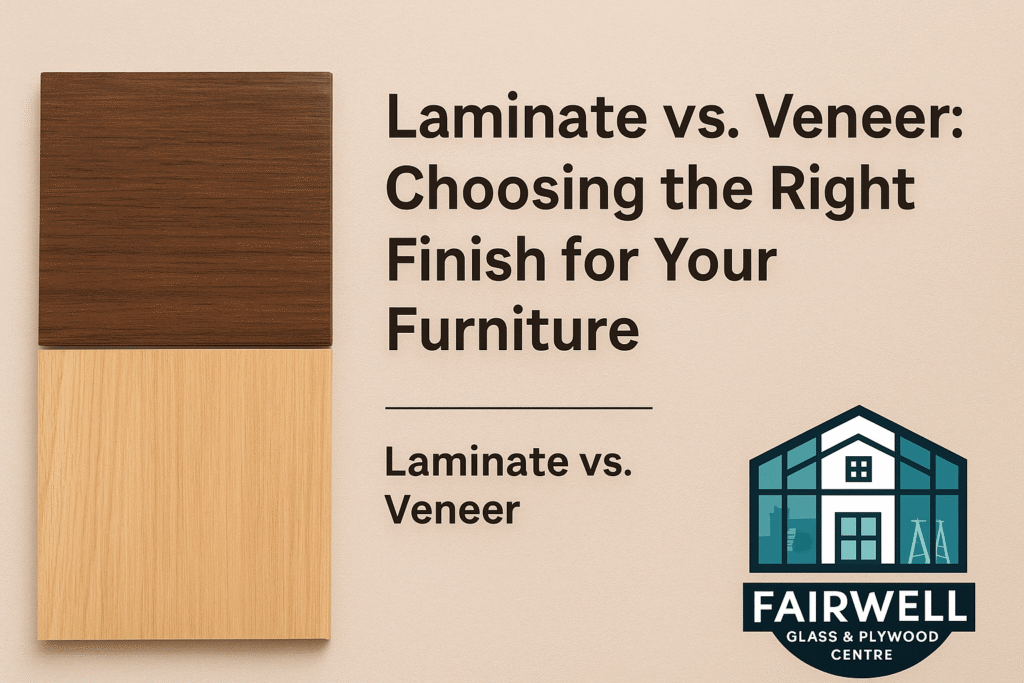
Laminate vs. Veneer: Choosing the Right Finish for Your Furniture
If you’re selecting finishes for cabinets, wardrobes, kitchen units or feature furniture, the choice between laminate and veneer affects appearance, durability, cost and maintenance. This guide breaks down the practical differences, use-cases, and designer tips so you can pick the right finish for your project.
What is Laminate?
Laminate refers to a synthetic surface made by fusing decorative paper and melamine resin onto a fiberboard or plywood substrate. Laminates come in a wide range of textures and colors — matte, glossy, textured (woodgrain), stone-look, metallic and more. They are factory-made sheets applied to substrates using heat and adhesive.
What is Veneer?
Veneer is a thin slice of real wood (typically 0.6mm–3mm) glued onto a substrate like plywood or MDF. Veneer preserves the natural grain and texture of the wood species—teak veneer, walnut veneer, oak veneer, etc.—and is often finished with oils, PU or lacquer for protection and sheen.
Laminate vs Veneer — Side-by-Side Comparison
Feature
Laminate
Veneer
Appearance
Wide range of colors & patterns; can mimic wood, stone, metallics.
Authentic wood grain; natural depth & variation.
Durability
Highly scratch & stain resistant (with good quality laminate).
Durable but surface can dent or scratch; susceptible to moisture if not sealed.
Cost
Generally lower cost for large areas; economical.
Higher material cost (real wood) — premium finish.
Repairability
Hard to repair if the laminate is badly damaged; usually replace the panel.
Minor scratches can be sanded and refinished.
Environmental
Mostly synthetic; eco-impact varies by manufacturer (choose low-VOC options).
Real wood—better if sourced responsibly; veneer uses less timber than solid wood.
Easy to clean — ideal for high-traffic furniture and kitchen cabinetry
Cost-effective for large-scale projects
Laminate — Cons
Can look synthetic on close inspection (some high-end textured laminates do very well)
Once peeled or chipped, repair typically requires replacement
Not as valued as real wood in luxury projects
Veneer — Pros
Authentic wood look & feel with unique grain
Can be sanded and refinished if scratched
Perceived as premium by clients and buyers
Veneer — Cons
More expensive than standard laminate
Needs careful sealing to resist kitchen moisture
Color and grain variation must be managed across panels
Designer & Architect Tips (What Pros Consider)
Function first: In kitchens and areas with heavy use, choose finishes that resist staining and impact. High-quality laminates or sealed veneers are typical choices.
Edge detailing: Use matching or ABS edges for laminates; for veneer, pay attention to veneer match and edge banding to avoid visible joins.
Mix & match: Use veneer as a focal finish (feature wall, island front) and laminate on high-wear surfaces to control cost.
Seam planning: For veneer, plan panel layout to maintain grain flow across doors and panels—this makes furniture look premium.
Climate: In humid climates (like Hyderabad), prefer well-sealed veneer or moisture-resistant laminates; use BWR/MDF substrates where necessary.
Maintenance & Longevity
Laminate: Wipe with a mild detergent and soft cloth. Avoid abrasive cleaners. Good-quality laminates can last 10–20 years in normal use.
Veneer: Dust regularly, wipe spills quickly, and avoid prolonged exposure to water. Minor scratches can be stained or refinished by a carpenter. Veneer surfaces can last decades if maintained.
Cost & Budgeting (How to Plan)
Costs vary widely depending on brand, substrate, and finish. As a guideline:
Laminate finish (material + application) — usually the more economical option for large built-in units.
Veneer finish — higher material cost; expect premium price for exotic species and matched panels.
Tip: Use veneer selectively for visible fronts and laminate for carcasses to balance budget and aesthetics.
Best Use-Cases — Quick Recommendations
Budget kitchens: Laminate for cabinets + laminate countertops (or granite)
Premium kitchens: Veneer fronts + laminate/MDF carcass for durability
Office furniture: Laminate for desks & storage — low-maintenance
Feature furniture: Veneer for wardrobes, TV units, premium tables
Where to Buy — Hyderabad (Trusted Supplier)
Looking for authentic laminates, veneers, and professional finishing in Hyderabad?
Fairwell Glass & Plywood Centre – Fittings & Interiors supplies high-quality laminates, decorative veneers, plywood substrates, and provides cutting & finishing services for interior designers, contractors and homeowners across Hyderabad.
We serve Kompally, Manikonda, Narsingi, Tellapur, Kokapet, LB Nagar, Bachupally, Banjara Hills, Gachibowli, Jeedimetla, Malakpet, Shamshabad, Medchal, Patancheru and more.
FAQs — Laminate vs Veneer
Is laminate better than veneer?
Neither is universally better—laminate is better for durability and low maintenance; veneer is better for authentic wood appearance and refinishing ability. Choice depends on budget and design priorities.
Can veneer be used in kitchens?
Yes — but veneer must be properly sealed and edges must be well-banded to prevent moisture ingress. For heavy-duty wet areas, consider marine-grade substrates under the veneer or use laminate.
How do I match veneer panels for a consistent look?
Ask your supplier for “book-matching” or “slip-matching” and ensure panels are cut from the same batch to maintain grain continuity across doors and surfaces.
Which is more eco-friendly?
Veneer uses real wood but less timber than solid wood. Laminate’s eco-impact depends on manufacturer and adhesives—opt for low-VOC, E0/E1 rated products where possible.
Conclusion
When choosing between laminate and veneer, evaluate the use-case:
Choose laminate for kitchens, office furniture, and high-traffic areas where durability and cost-efficiency matter.
Choose veneer when you want a natural wood look, ability to refinish, and a premium feel—especially for feature units and high-visibility furniture.
If you need help choosing finishes for a specific project or want to inspect samples, Fairwell Glass & Plywood Centre stocks a wide range of laminates and veneers and works with designers to deliver finished furniture across Hyderabad. Call / WhatsApp us at +91 99 4812 3652.